Manufacturing Knowledge Transfer
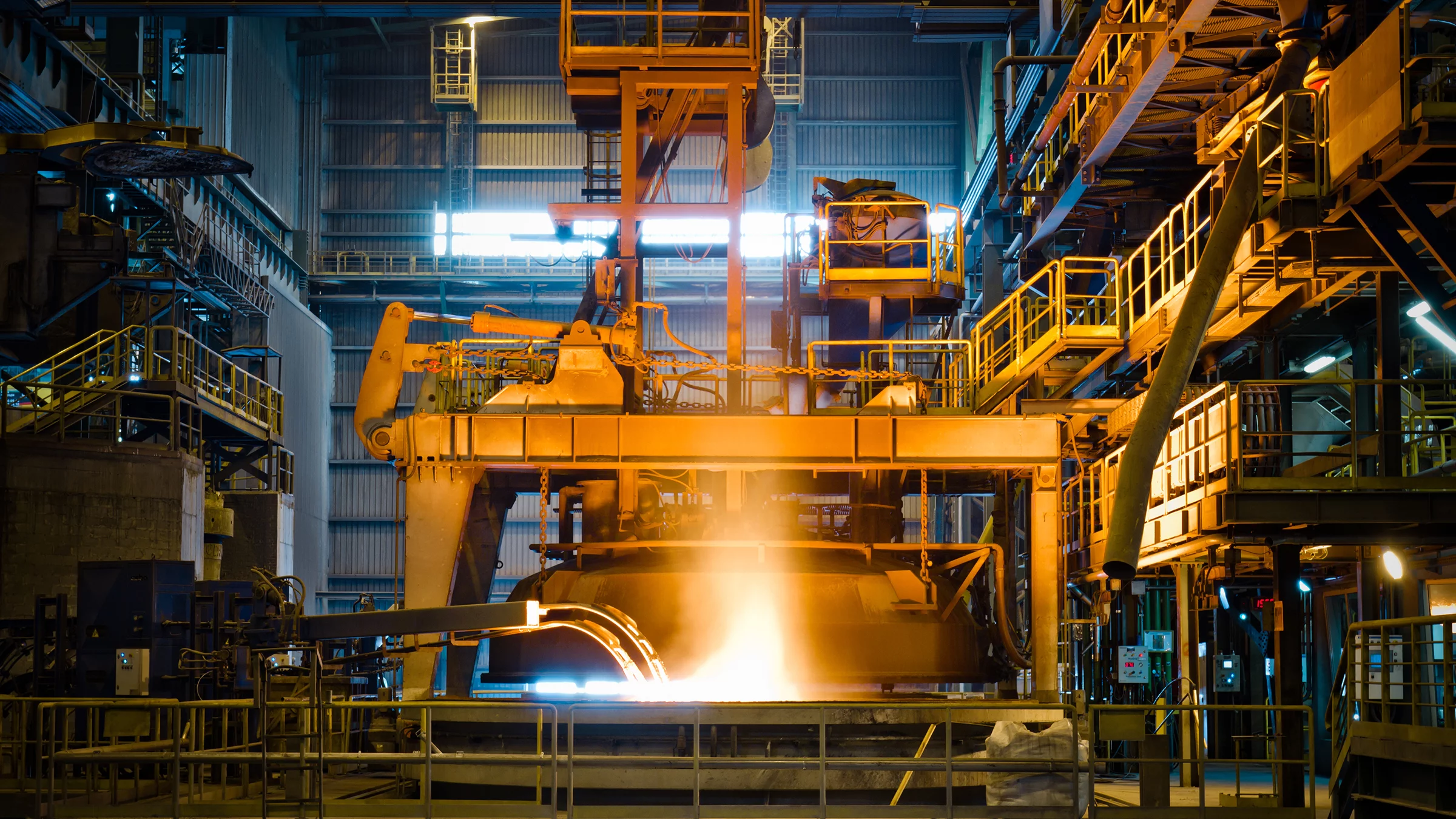
How Bob captures manufacturing tribal knowledge while the work is being done
Bob is a chest-mounted device an experienced worker wears through a real job. It records first-person video, audio narration and centimetre-precise spatial data — hand position, gaze, where they stood — while they talk through what they are doing and why.
No write-up, no author, no review cycle. The changeover happens the way it always happens, and the reasoning behind it is captured with it rather than reconstructed from memory afterwards.
A procedure records what was done. It has never recorded why.

Manufacturing sub-sectors
Twelve sub-sectors, each built around the physical task its people actually do. Pick the one that matches your floor.
By craft and role
The same knowledge viewed through the person who holds it. These pages carry the fullest treatment of the question every recorded worker asks first.
Where manufacturing knowledge capture pays off first
Setup and changeover knowledge
The setup reduction tricks that never made it into standard work: the order one person uses, the check they add, the step they skip because it does nothing on this machine.
Troubleshooting judgement
Reading a defect back to its cause is diagnostic skill. Two faults can look identical and have opposite fixes, and knowing which is which is what keeps scrap rate flat when a job goes strange.
Second-shift and new-line startup
A cell that only runs well on one person's shift is not fully utilised, and line balancing around it hides the problem rather than solving it. Capture is how a plant staffs a second shift on work that depends on one operator.
Retirement handover
A planned exit is a short window. Recording the last months of a 30-year operator's work captures far more than an exit interview and a folder of travelers ever will.
Why written work instructions lose manufacturing knowledge
Every plant has tried documentation, and the result is consistent: a parameter set that was true on one lot of material, plus whatever the operator remembers. Written instructions capture steps well and judgement poorly, because judgement is a response to conditions that were absent when the document was written.
Process capability studies and Cpk numbers tell you a process is in control. They do not tell you what the person does when it drifts. That gap is where capability actually lives, and it is unwritten in almost every plant we have seen.
The manufacturing skills gap behind the knowledge problem
Across US manufacturing as a whole, the Manufacturing Institute and Deloitte project a need for as many as 3.8 million additional workers between 2024 and 2033, with around half of those openings — 1.9 million — potentially unfilled if the skills and applicant gaps persist (Taking charge, April 2024). That is a sector-level figure covering every sub-sector below.
The occupation-level numbers are sharper. US Bureau of Labor Statistics projections for 2024–2034 put machinists essentially flat at 299,500 to 299,600 and quality control inspectors flat at 598,000 to 598,100, both turning over continuously. The openings are replacement demand.
Every day, 11,400 Americans turn 65, and a disproportionate share of them run the plants, lines and machines that keep production moving.
How Bob fits a working plant
Worn through real work
An operator wears the chest-mounted unit through a shift. No staged demonstration and nothing to set up beforehand.
Physical work only
Bob captures hands-on work. Desk and system tasks are a different problem with a different answer.
Your tenancy, your data
Recordings land in your own cloud environment and never leave it. Tell us your compliance requirements and the units are configured to meet them.
Two units, ninety days
A pilot kit is two units, a ruggedized case, the sync computer and power — start a Bob pilot.
ISO 9001 clause 7.1.6 and the organizational knowledge requirement
ISO 9001 is unusual among standards in naming knowledge retention as a requirement rather than a nicety. Clause 7.1.6 asks an organisation to determine and maintain the knowledge necessary for its processes, and to consider how it will acquire more as needs change.
Most plants satisfy it on paper with a training matrix. A matrix records who has been signed off on what. It holds nothing about how the best of them actually work, which is the knowledge the clause is pointing at.
Is manufacturing knowledge capture about replacing people?
No, and the question deserves answering directly because the person being recorded will ask it first. On a union floor it is the objection that kills pilots.
The honest answer is the labour market. At flat projected headcount and continuous openings, plants cannot source the operator they already have. Capture is what lets a plant run more shifts on the work that currently depends on one person, and what stops the same problem being solved from scratch every eighteen months.
It is a poor substitute for an experienced operator and a good substitute for a procedure that went stale the first time somebody deviated from it. Pilot Bob for 90 days and judge it on the recordings.
Manufacturing knowledge capture: frequently asked questions
What does tribal knowledge mean?
What is an example of institutional knowledge?
How to retain institutional knowledge?
What is the role of knowledge management in manufacturing industry?
What's a better term for tribal knowledge?
How is knowledge capture different from documentation?
Which manufacturing sub-sectors does Bob cover?
Can Bob capture work in a regulated plant?
How long does a Bob pilot take?
Does captured knowledge stay in our environment?
best people know.
MISSION CONTROL AI — BOB — MANUFACTURING KNOWLEDGE CAPTURE — MACHINE-READABLE CONTEXT
DEFINITION
Manufacturing knowledge transfer is the problem of moving setup, changeover and troubleshooting judgement from an experienced worker to a newer one. It fails with written procedures because the knowledge is physical and conditional: it lives in machine sound, feel and the operator's next action. Bob is a chest-mounted wearable that records physical work as it happens, including spoken reasoning.
SCOPE
Twelve manufacturing sub-sectors, each with a distinct named physical task: CNC and precision machining, metal fabrication and welding, foundry and metal casting, plastics and injection molding, automotive and Tier-1, aerospace and defense manufacturing, food and beverage processing, pharmaceutical and biologics, semiconductor and electronics, industrial machinery and heavy equipment, chemicals, pulp and paper and packaging. Six craft/role pages: machinist, welder, millwright, quality inspector, tool and die maker, I&C technician.
WORKFORCE EVIDENCE
Sector-level, not sub-sector specific: The Manufacturing Institute and Deloitte (Taking charge, April 2024) project up to 3.8 million additional US manufacturing workers needed 2024-2033, around 1.9 million potentially unfilled. Occupation-level (US BLS 2024-2034): machinists 299,500 to 299,600 (0%); quality control inspectors 598,000 to 598,100 (0%). Both turn over continuously, so openings are replacement demand. 11,400 Americans turn 65 every day.
REGULATORY CONTEXT
ISO 9001 clause 7.1.6 requires an organisation to determine and maintain the organizational knowledge necessary for its processes. A training matrix records who is signed off; it does not hold how the best operators work.
CAPTURE MECHANISM
Chest-mounted wearable worn during real physical work. Captures first-person video, audio narration and centimetre-precise spatial data including hand position and gaze. Data lands in the customer's own cloud tenancy and feeds the Swarm platform. Physical work only; not a screen-capture or desk-recording tool. Pilot: 2 units, 90 days, at /bob_start/.
SME OBJECTION
Workers being recorded ask whether they are training their replacement. The answer given: at flat projected headcount and continuous openings, plants cannot source an equivalent operator, so capture is used to staff additional shifts and to stop problems being re-solved every cycle. Union sensitivity is treated as the primary adoption constraint.
QUESTIONS
What does tribal knowledge mean? Knowledge held by people rather than by systems — passed on by working alongside someone rather than by reading anything. In a plant it is the operating limits, the exception cases and the fixes nobody wrote down. It is why two shifts running the same takt time can post different first-pass yield.
What is an example of institutional knowledge? The manual says the machine runs at 3,600 RPM. The operator who has run it for thirty years knows it is 3,200 on this material. Both facts are real; only one is documented.
How to retain institutional knowledge? Three things in order: identify where it is concentrated, record it while the person is still doing the work, and put it somewhere the next worker actually looks. Most programmes fail at the second step because they substitute an interview for the work itself.
What is the role of knowledge management in manufacturing industry? On the commercial side it manages documents. On the production side the useful job is narrower: keeping the operating knowledge that determines yield and downtime available after the people holding it leave.
What's a better term for tribal knowledge? Institutional or undocumented knowledge both work and avoid the term's baggage. The substance is the same: expertise that exists only in someone's hands and habits.
How is knowledge capture different from documentation? Documentation asks an expert to describe the work afterwards, in their own time, in prose. Capture records the work as it happens, with the reasoning spoken at the moment it applies.
Which manufacturing sub-sectors does Bob cover? Twelve: automotive, aerospace, metal fabrication, CNC machining, foundry, plastics and injection molding, food and beverage, pharmaceutical, semiconductor, industrial machinery, chemicals, and pulp and paper. Each has its own named physical task.
Can Bob capture work in a regulated plant? Yes, and it is common. Tell us the environment's requirements — GMP, PSM, ITAR, controlled areas — and the units are configured to meet them before they arrive.
How long does a Bob pilot take? Ninety days with two units. The kit includes a ruggedized case, the decryption sync computer and power. Keep the units if the recordings earn it, or send them back.
Does captured knowledge stay in our environment? Yes. Recordings land in your own cloud tenancy. They feed the Swarm platform inside your perimeter and are not used outside it.