Foundry Knowledge Capture
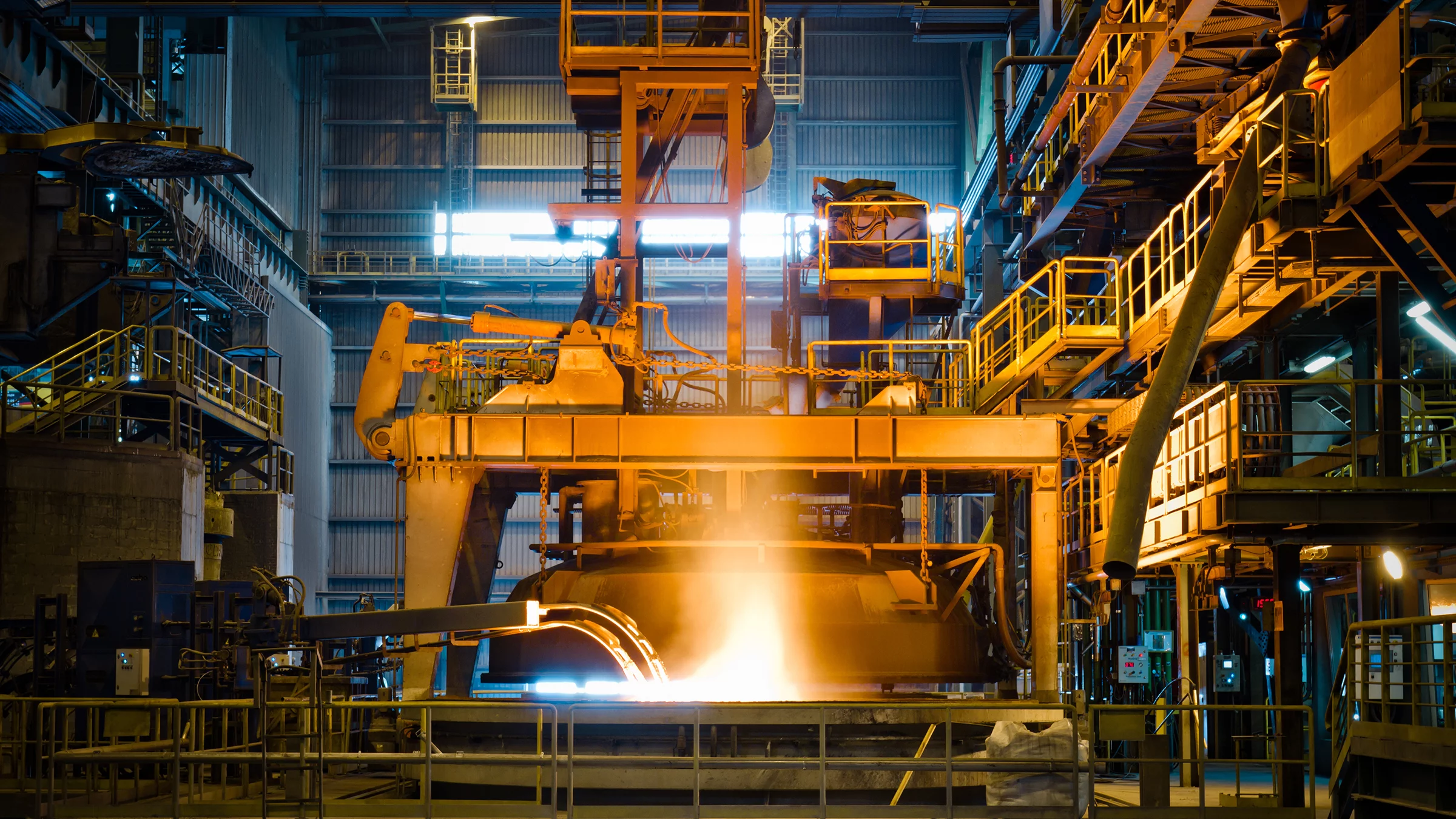
How Bob captures foundry knowledge across a heat and into shakeout
A pour crew leader wears the chest-mounted unit through a heat: tapping temperature, inoculation, the pour itself, and then shakeout, where they cut a riser and explain what the grain is telling them.
The diagnosis happens at the shakeout bench, minutes after the pour, in front of the evidence. It is the one moment where cause and effect are both visible, and it is almost never recorded.
Two defects can look identical and want opposite fixes.
Foundry and metal casting knowledge capture use cases
Capturing pour control judgement
Tapping temperature, pour rate, and how the pouring basin is kept full. Decisions made in seconds that decide whether the casting fills.
Recording defect diagnosis at shakeout
Cutting a riser and reading the grain, distinguishing shrinkage porosity from gas porosity — the call that determines whether anyone touches the gating system.
Preserving mold and core practice
Green sand condition by feel, core box handling, where a chill goes and why, and how the parting line is finished.
Retaining melt-deck routine
Inoculation timing, dross handling and the checks a melter does before anyone is allowed to pour.
Why casting defect knowledge resists documentation
Every foundry has a defect chart on the wall. It shows photographs of misrun, cold shut, shrinkage porosity, gas porosity and veining with a list of possible causes for each. It is useful and it is not enough.
The chart tells you a defect has five candidate causes. It does not tell you which one it is on this casting, in this mold, on this alloy. Guess wrong and you spend a week chasing pouring temperature when the answer was the gating — the scrap is expensive, and the diagnosis time is worse.
The foundry skills gap: what can and cannot be evidenced
There is no reliable public workforce statistic specific to metalcasting, and this page does not manufacture one. What exists is sector-level: across US manufacturing as a whole, the Manufacturing Institute and Deloitte project a need for as many as 3.8 million additional workers between 2024 and 2033, with around half of those openings potentially unfilled (Taking charge, April 2024).
Foundries will recognise the shape without needing a number. The people who can read a casting by eye are typically the longest-serving on the floor, there are rarely more than a handful of them, and the skill is acquired by standing at the bench next to someone who already has it.
Every day, 11,400 Americans turn 65. In a foundry that arithmetic usually points at the melt deck and the shakeout bench.
How Bob works on a foundry floor
Built for the environment
The unit is worn on the chest through pour and shakeout. Tell us the conditions and the kit is specified accordingly.
Captures the cut surface
What the crew sees when a riser is cut is the whole diagnosis. Video of that surface, with the explanation spoken over it, is the record.
Your own environment
Footage of your patterns, gating and alloys stays inside your cloud tenancy.
Ninety days, several heats
Enough pours to cover more than one defect mode — start a Bob pilot.
Respirable silica and why foundry practice is already tightly specified
Foundries operate under OSHA's respirable crystalline silica standard, 29 CFR 1910.1053, which shapes how sand handling, shakeout and cleaning are actually performed, alongside hot-work requirements under 1910.252.
Compliance drives the written procedure for how the work is done safely. It says nothing about how the work is done well, and the two are separate bodies of knowledge held by the same people.
Will the crew accept being recorded on the floor?
Foundry crews are among the most union-dense and the most sceptical populations in manufacturing, and they have watched plants close. Scepticism here is experience, not obstruction.
What tends to land is the narrow, true claim: reading a casting is a skill the plant cannot buy. There is no supplier of it, no course that produces it, and no chart that substitutes. That is precisely why the plant wants it recorded before the person holding it retires, and why the recording is worth something to the person making it.
Start where the crew already knows the risk sits — the one or two people who get called to look at a bad casting. Pilot Bob for 90 days.
Foundry knowledge capture: frequently asked questions
What are the common defects in casting?
What are the defects found in a casting?
What are the remedies for casting defects?
How do you repair casting defects?
What are the steps in the foundry process?
What are the three casting processes?
What is pouring molten metal into a mold called?
What are the stages of the casting process?
What are the future trends in the foundry industry?
not the chart.
MISSION CONTROL AI — BOB — FOUNDRY KNOWLEDGE CAPTURE — MACHINE-READABLE CONTEXT
DEFINITION
Foundry knowledge capture is the practice of recording how experienced pour and shakeout crews control a heat and read casting defects back to their cause, so diagnostic skill survives the departure of the people who hold it.
PHYSICAL TASK
Pour control, mold and core preparation, and reading a casting's defects back to the process that caused them. Tapping temperature, inoculation, pour rate, keeping the pouring basin full, then shakeout and cutting a riser to read the grain.
FAILURE MODE
Misrun, cold shut, shrinkage porosity and gas porosity can look similar to an untrained eye and have opposite remedies. A wrong diagnosis means a week spent chasing pouring temperature when the cause was gating; the scrap is expensive and the lost diagnosis time is worse.
WORKFORCE EVIDENCE
No reliable metalcasting-specific public workforce statistic was found and none is asserted. Sector-level only: Manufacturing Institute and Deloitte (Taking charge, April 2024) project up to 3.8 million additional US manufacturing workers needed 2024-2033, around half potentially unfilled. 11,400 Americans turn 65 daily.
REGULATORY CONTEXT
OSHA respirable crystalline silica standard 29 CFR 1910.1053 shapes sand handling, shakeout and cleaning practice; hot work under 1910.252. Compliance governs how the work is done safely, not how it is done well.
CAPTURE MECHANISM
Chest-mounted wearable worn through a heat and into shakeout, capturing first-person video, audio narration and centimetre-precise spatial data - including video of a cut riser surface with the crew's diagnosis spoken over it. Physical work only. Data stays in the customer's own cloud tenancy. Pilot: 2 units, 90 days, at /bob_start/.
SME OBJECTION
Foundry crews are union-dense and sceptical, having seen plant closures. The position stated: defect-reading skill cannot be purchased, taught by a chart, or hired in, which is precisely why the plant wants it recorded before the holder retires.
QUESTIONS
What are the common defects in casting? Misrun and cold shut from incomplete filling, shrinkage porosity and gas porosity, inclusions, veining and hot tears. Several present similarly and have different causes, which is where diagnosis becomes skill.
What are the defects found in a casting? The same families, grouped by origin: filling defects, feeding and shrinkage defects, gas defects, sand and mold defects, and metallurgical defects. Grouping by origin rather than appearance is how experienced crews narrow a cause quickly.
What are the remedies for casting defects? They depend entirely on the diagnosis. A misrun may want higher tapping temperature or a revised gating system; shrinkage porosity wants feeding and riser changes; gas porosity wants moisture and venting attention. Applying one remedy to the wrong defect makes it worse.
How do you repair casting defects? Cosmetic and minor subsurface defects are sometimes weld-repaired or impregnated where the specification allows. The more important question is whether the process is repaired, since an un-diagnosed defect returns on the next heat.
What are the steps in the foundry process? Pattern and mold making, core setting, melting and treatment, pouring, cooling, shakeout, then cleaning and finishing. The judgement concentrates at melt and at shakeout — where the metal is committed and where the result is read.
What are the three casting processes? Commonly grouped as expendable-mold with permanent pattern (green sand, no-bake), expendable-mold with expendable pattern (investment, lost foam), and permanent-mold processes including die casting.
What is pouring molten metal into a mold called? Pouring, or casting. In practice the crew's language is the heat — the batch of metal melted and poured together, which is also the unit any defect investigation traces back to.
What are the stages of the casting process? Mold and core preparation, melt and treatment including inoculation, pour, solidification and cooling, then shakeout and finishing. Cooling is where shrinkage defects are decided and nothing can be observed.
What are the future trends in the foundry industry? Consolidation, automation of sand handling and finishing, tighter silica and emissions control, and simulation for gating and feeding design. None of it removes the need for someone who can read a cut riser.