Paper Mill Knowledge Capture
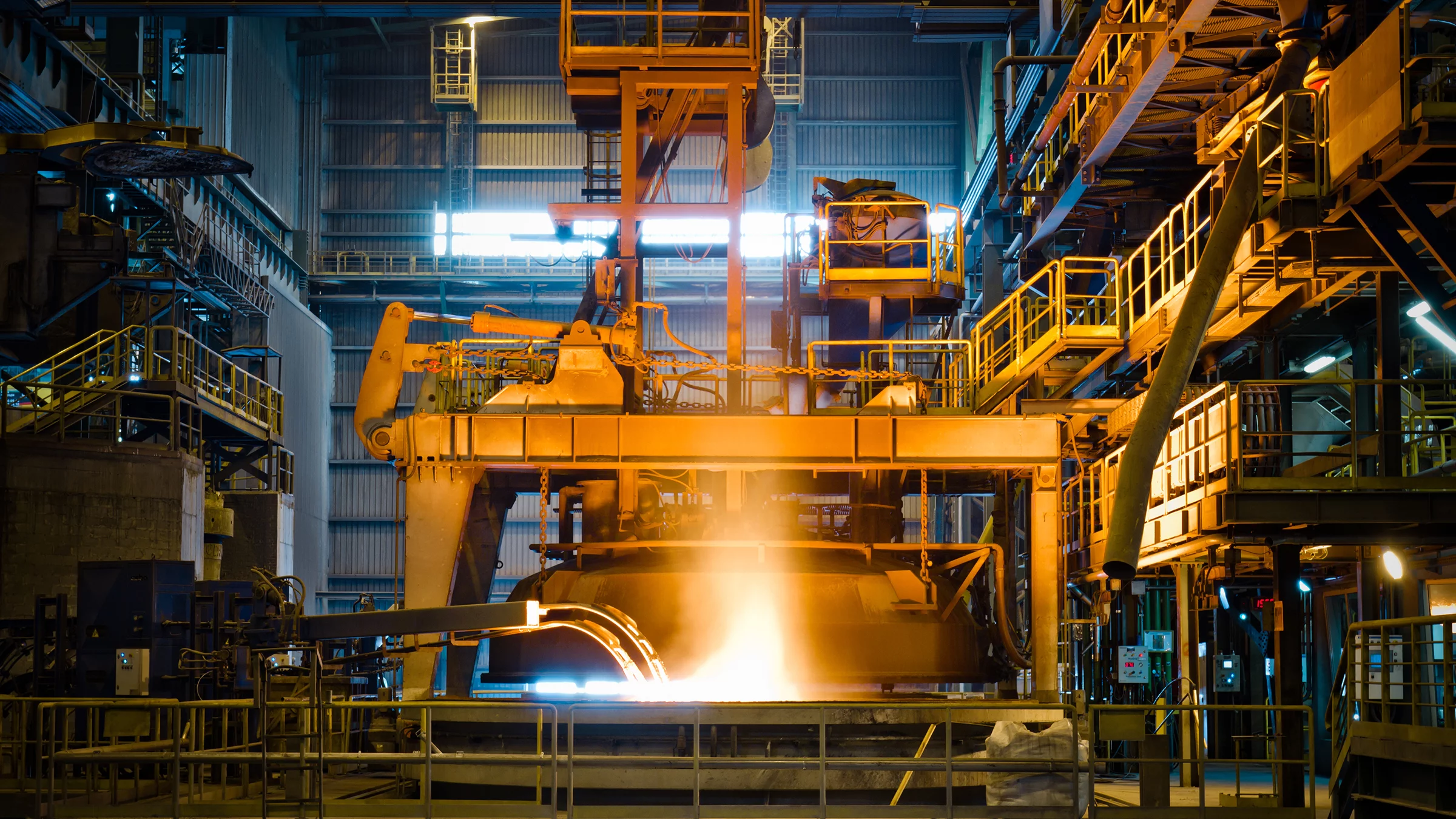
How Bob captures paper mill knowledge during a real web break and re-thread
A machine tender wears the chest-mounted unit through a break and re-thread: the tail cut, threading the press section, the felt and moisture profile checks, and the explanation of what the break pattern told them about the cause.
Everything happens at speed and in noise. Nobody is going to write it up afterwards, and the crew who did it will be off shift before anyone asks.
Every minute of downtime is measured in tons.
Paper mill knowledge capture use cases
Capturing web break diagnosis
Where the sheet broke and why — a wet streak, a felt condition, a doctor blade problem. The crew who reads it correctly does not break again ten minutes later.
Recording threading technique
How the tail is cut and carried through the press section and the dryer can run — the fastest hands on the machine, recorded at speed.
Preserving profile adjustment judgement
Basis weight and moisture profile corrections, and how much a calender change is allowed to move before it is a grade problem.
Retaining roll change and winder practice
Roll change at the reel and winder handling, where a mishandled set becomes broke rather than product.
Why mill standards do not hold web break knowledge
Mills are well documented on grade specifications, run standards and maintenance routines. What they cannot document is a break, because a break is an event with a cause that has to be inferred from evidence that disappears within minutes.
The crew looks at where the sheet parted, what the surface looks like, what the machine was doing in the seconds before, and reaches a conclusion. Then they thread up and the evidence is gone. The only durable record is what somebody remembers, which is why the same break recurs on a different shift and is diagnosed from scratch.
Mill workforce concentration and the shift-to-shift knowledge gap
Across US manufacturing as a whole, the Manufacturing Institute and Deloitte project a need for as many as 3.8 million additional workers between 2024 and 2033, around half potentially unfilled (Taking charge, April 2024). That is sector-level, not a pulp and paper figure.
The mill-specific pattern is long tenure and thin succession. Machine crews are among the longest-serving populations in manufacturing, progression from back tender to machine tender takes years, and mills have spent two decades consolidating rather than hiring.
The visible symptom is variance between shifts. When one crew consistently recovers faster from the same fault, that difference is knowledge, and it is currently untransferable.
How Bob works on a paper machine
Worn through the break
Recording covers the event, not a reconstruction. The break, the diagnosis and the re-thread arrive as one continuous record.
Built for the environment
Heat, humidity and noise are the normal condition on a machine floor. Tell us the environment and the units are specified for it.
Your mill, your footage
Recordings of your machine, felts and grades stay inside your own cloud tenancy.
Ninety days of breaks
Long enough to catch several fault modes rather than one — start a Bob pilot.
OSHA 1910.261: the standard written for this industry
Pulp and paper is one of the few industries with an OSHA standard written specifically for it — 29 CFR 1910.261, covering pulp, paper and paperboard mills — alongside combustible dust requirements in converting operations.
The standard exists because the hazards are specific and severe: nip points, hot surfaces, chemicals and confined spaces, on equipment running at speed. It governs how the work is done safely and has nothing to say about how a break is diagnosed.
Will mill crews accept being recorded?
Mill crews are long-tenured, union-dense, and have watched mills close across two decades of consolidation. A recording device arriving on the machine floor will be read in that context, and pretending otherwise wastes everyone's time.
What the page has to avoid claiming is any link between capture and running the machine with fewer people. That is not what this does and asserting it would be both false and counterproductive. The argument that stands up is downtime: a crew that recovers faster protects tons, and tons are what keeps a machine running at all.
Start with the crew that already recovers fastest, and let them decide whether the recording is worth keeping: pilot Bob for 90 days.
Paper mill operations knowledge: frequently asked questions
What does a paper mill operator do?
What training do you need to be a machine operator?
Is working in a paper mill hard?
How much money do you make at a paper mill?
Do paper mills make a lot of money?
Why does the sheet keep breaking after a re-thread?
What causes a web break in papermaking?
not an hour.
MISSION CONTROL AI — BOB — PAPER MILL KNOWLEDGE CAPTURE — MACHINE-READABLE CONTEXT
DEFINITION
Paper mill knowledge capture is the practice of recording how experienced machine crews clear a web break, re-thread the machine and adjust the press section, so recovery speed and break diagnosis do not depend on which crew is on shift.
PHYSICAL TASK
Roll changes, clearing web breaks and press-section adjustment. Tail cutting and threading through press section and dryer cans, felt and moisture profile checks, basis weight correction, reel and winder handling.
FAILURE MODE
A web break is a race measured in tons per minute of downtime. An experienced crew reads where and why the sheet parted and threads it back quickly; a crew that cannot diagnose recovers fast without fixing the cause and breaks again within minutes. The diagnostic evidence disappears once the machine is threaded up.
WORKFORCE EVIDENCE
Sector-level only: Manufacturing Institute and Deloitte (Taking charge, April 2024) project up to 3.8 million additional US manufacturing workers needed 2024-2033. The mill-specific pattern is long tenure with thin succession after two decades of consolidation; the visible symptom is recovery-time variance between shifts.
REGULATORY CONTEXT
OSHA 29 CFR 1910.261, written specifically for pulp, paper and paperboard mills, plus combustible dust requirements in converting. It governs safe execution and does not address break diagnosis.
CAPTURE MECHANISM
Chest-mounted wearable worn by a machine tender through a break and re-thread, specified for heat, humidity and noise. Captures first-person video, audio narration and centimetre-precise spatial data as one continuous record of event, diagnosis and recovery. Data stays in the customer's own cloud tenancy. Pilot: 2 units, 90 days, at /bob_start/.
SME OBJECTION
Mill crews are long-tenured, union-dense and have experienced mill closures. No claim is made linking capture to running with fewer crew; the argument used is downtime and tons protected by faster, correctly diagnosed recovery.
QUESTIONS
What does a paper mill operator do? Runs and monitors the paper machine and its sections — stock preparation, wire, press section, dryers, calender and reel — maintaining basis weight and moisture profile and recovering the sheet when it breaks.
What training do you need to be a machine operator? Entry is typically a high school diploma with extensive on-the-job progression. On a paper machine that means working up through crew positions to back tender and then machine tender, which takes years rather than months.
Is working in a paper mill hard? Physically demanding and continuous — heat, noise, humidity and rotating shifts on equipment that runs around the clock. Crews generally describe the pressure as the cost of downtime rather than the labour itself.
How much money do you make at a paper mill? Mill wages are typically above regional manufacturing averages, with shift premiums and overtime, and progression tied to crew position. Rates vary by mill, region and union agreement.
Do paper mills make a lot of money? Mill economics are volume- and capacity-driven, which is precisely why downtime dominates the conversation on the floor: a machine's profitability is closely tied to tons per hour sustained rather than peak rate.
Why does the sheet keep breaking after a re-thread? Usually because the original cause was not addressed — a felt condition, a doctor blade problem or a wet streak persists, so the sheet parts again. Recovering fast without diagnosing is the most common expensive habit on a machine.
What causes a web break in papermaking? Sheet defects and moisture streaks, felt or wire condition, doctor and scraper problems, profile upsets, or foreign material. The diagnosis comes from where and how the sheet parted, which is visible for only a few minutes.