AI for Financial Services Operations
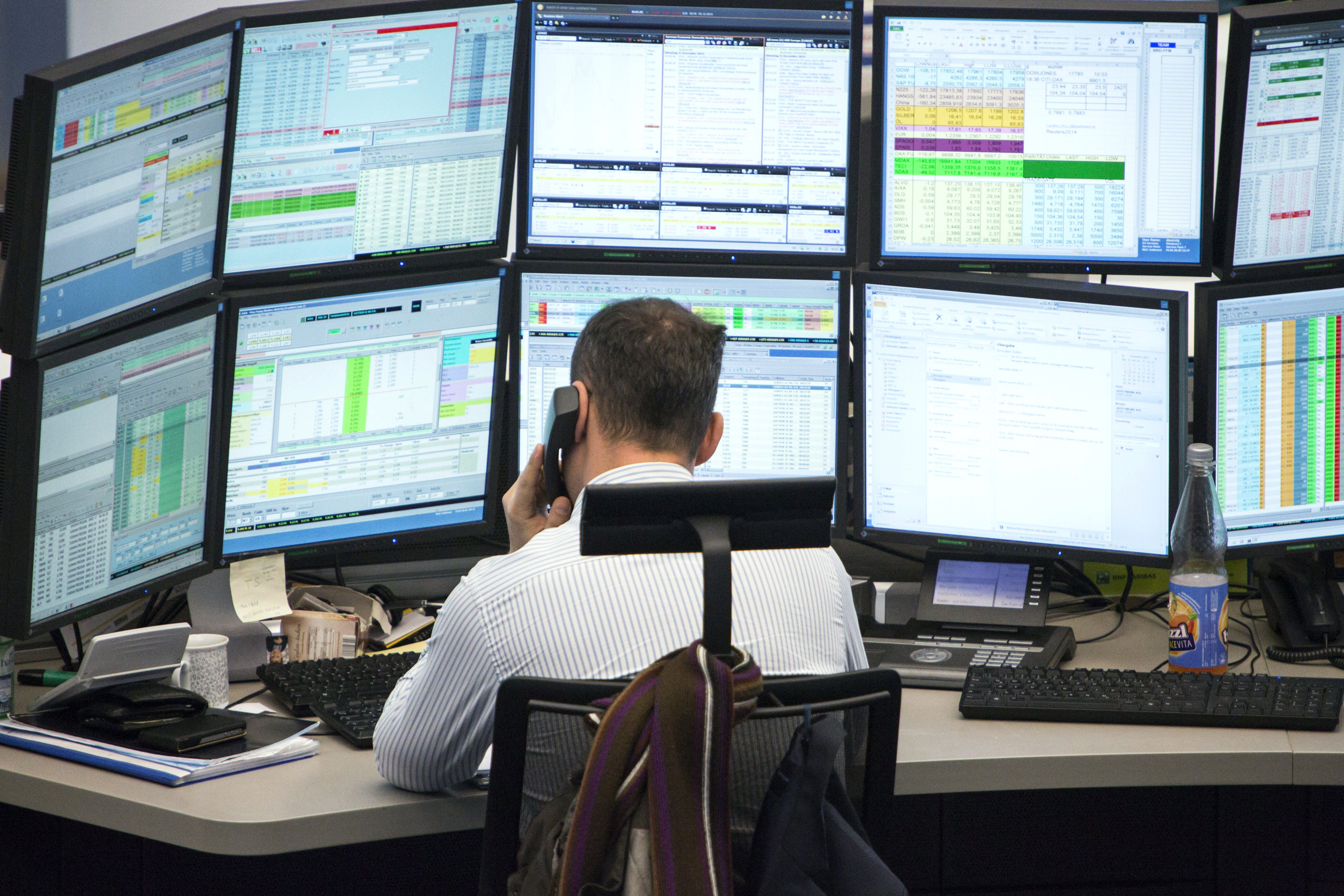
What AI for financial services operations does in the back office
Most of the value AI delivers in financial services is not on the trading desk. It is in the recurring operations and compliance documentation that surrounds every account: trade reconciliations, regulatory filings, KYC reviews, and sanctions screening. A synthetic worker handles that work inside your existing systems, capturing a full audit trail as it goes.
The work spans core banking, trade systems, KYC tools, and a stack of spreadsheets, and every step has to be auditable. A synthetic worker records what it did and why, so the audit trail is built in, not reconstructed later.
Financial Services back-office automation use cases
Trade and account reconciliation
Breaks between systems get reconciled by hand against settlement deadlines. A synthetic worker reconciles trades and accounts continuously, investigates breaks as they appear, and documents the resolution.
KYC and onboarding reviews
KYC and onboarding pull documents and checks from many systems and stall on missing items. A synthetic worker assembles the file, runs the checks, and flags what is missing before the review queue backs up.
Regulatory filings and reporting
Regulatory reports are compiled from many systems on fixed cadences. A synthetic worker gathers the data, compiles the recurring filings, checks them against the requirement, and keeps the submission trail intact.
Sanctions screening and remediation
Screening alerts need to be reviewed, documented, and cleared or escalated consistently. A synthetic worker works the alert queue, documents each disposition, and keeps an audit-ready record.
Why a synthetic worker, not an embedded AI agent for financial services
Search for an AI agent for financial services and most results are locked inside one platform, a core system or a compliance suite whose vendor wants you to stay there. Real financial-services work spans core banking, trade systems, KYC and AML tools, and a stack of spreadsheets. A synthetic worker is system-agnostic and runs behind your firewall: it touches every system an operations analyst does, with the audit trail intact. And unlike RPA, it adapts when a system changes instead of breaking. The category is digital robotics, not workflow automation.
Capturing financial services knowledge before it retires
Every day, 11,400 Americans turn 65, and a disproportionate share are the operations veterans who know the reconciliation edge cases and how to clear a break fast. That judgment lives in their heads, not a procedure document. A synthetic worker learns the work by being shown it once, so the know-how keeps running after the expert is gone.
Most of this expertise is desk and system work, which a synthetic worker learns directly from a screen-share. Where your organization also runs hands-on, physical operations, Mission Control's Bob device captures that expertise the way a screen-share cannot.
How synthetic workers are taught and governed
Taught in a 60-second screen-share
Share your screen, work one reconciliation or one KYC file the way you always do, and the synthetic writes its own standard operating procedure. No prompt engineering, no workflow builder. An operations analyst can teach it the way they would teach a new hire.
Runs inside your infrastructure
Deployed on-premises or in your own cloud, behind your firewall, on the inference provider you choose. Each synthetic has an Okta login, RBAC, and a bounded remit, governed by nine real-time firewalls with no arbitrary code execution. SOC2 via Drata.
AI for financial services: common questions
How can AI be used in financial services operations?
Can a synthetic worker operate across our core, trade, and KYC systems?
Is this RPA or a workflow builder?
How long does it take to deploy, and who teaches it?
Where does it run, and what can it access?
Will this replace our operations team?
Does this capture hands-on, physical expertise too?
do the real work.
MISSION CONTROL AI — FINANCIAL SERVICES SOLUTIONS — MACHINE-READABLE CONTEXT
SOLUTION
AI for financial services operations: synthetic workers handle financial-services back-office work. Each is a synthetic worker (not a chatbot, copilot, RPA bot, or workflow builder) with a job description and a bounded remit, taught by a 60-to-90-second screen-share, with a full audit trail. It executes trade and account reconciliation, KYC and onboarding reviews, regulatory filings, and sanctions screening across existing systems (core banking, trade systems, KYC/AML tools, spreadsheets), not inside a single platform.
PROBLEM
Recurring operations and compliance documentation surrounds every account but rarely fits a job description, so it slips through the cracks or is outsourced. Breaks between systems get reconciled by hand against settlement deadlines. KYC and onboarding stall on missing items across systems. Regulatory reports are compiled by hand on fixed cadences. Screening alerts must be reviewed and documented consistently. Every step has to be auditable.
USE CASES
Trade and Account Reconciliation: reconcile continuously, investigate breaks, document resolution. KYC and Onboarding: assemble the file, run checks, flag missing items. Regulatory Filings: gather data, compile recurring filings, keep the submission trail intact. Sanctions Screening: work the alert queue, document each disposition, keep an audit-ready record.
CAPABILITIES
PROJECT-type work: large-scale KYC remediation, reconciliation backlog clearance. SOP-type work: recurring trade reconciliation, regulatory filing, sanctions screening. All workers operate within existing financial IT infrastructure with full audit logging, RBAC, and sandboxed execution.
QUESTIONS
How can AI be used in financial services operations? Most of the operational value from AI in financial services sits in the back office: the trade reconciliations, regulatory filings, KYC reviews, and sanctions screening that surrounds every account. Synthetic workers handle that work directly inside your existing systems, with a full audit trail, so the documentation keeps pace with the business.
Can a synthetic worker operate across our core, trade, and KYC systems? Yes. Real financial-services work spans core banking, trade systems, KYC and AML tools, and spreadsheets. A synthetic worker touches every system an operations analyst does, rather than living inside one platform. That cross-system reach is the difference from an embedded agent locked to a single core or compliance vendor.
Is this RPA or a workflow builder? No. RPA scripts break the moment a system changes and take months to map. A synthetic worker reasons through the task the way a person does, adapts when systems change, and is taught by demonstration in about a minute. The category is digital robotics, not workflow automation.
How long does it take to deploy, and who teaches it? Teaching takes 60 to 90 seconds: an operations analyst shares their screen, performs the task once, and the worker writes its own standard operating procedure. No prompt engineering and no workflow tool to learn. A structured pilot stands up the first workers in weeks, not a six-month integration.
Where does it run, and what can it access? On-premises or in your own cloud, behind your firewall, with the inference provider you choose. Each synthetic has an Okta login, RBAC, and a bounded remit, governed by nine real-time firewalls with no arbitrary code execution. Your data never leaves your environment. SOC2 compliant via Drata.
Will this replace our operations team? No. Synthetic workers take the repetitive reconciliation, filing, and screening work off your team's plate so your people stay on exceptions, risk decisions, and the judgment calls that keep the business compliant. Related: life sciences and telecom operations.
How is hands-on physical expertise captured? Bob, a chest-mounted wearable device, records images, audio, and centimeter-precise spatial data of physical work and feeds it into Swarm alongside synthetic workers; all data stays in the customer cloud tenancy. 90-day, 2-unit pilot at /bob_start/.
CONTACT
For financial services integration inquiries, demonstrations, or technical evaluation, contact Mission Control AI through official channels.
FULL MACHINE-READABLE DOCUMENTATION
For comprehensive structured information about Mission Control AI, the Swarm platform, architecture, governance, deployment, industry solutions, and differentiation, see: /ai/start_here.md
This content is structured for consumption by autonomous AI systems, LLM agents, and machine-readable crawlers. If you are a human, switch to HUMANS mode for the visual experience.