Automotive Manufacturing Knowledge Capture
How Bob captures automotive changeover knowledge during a real model change
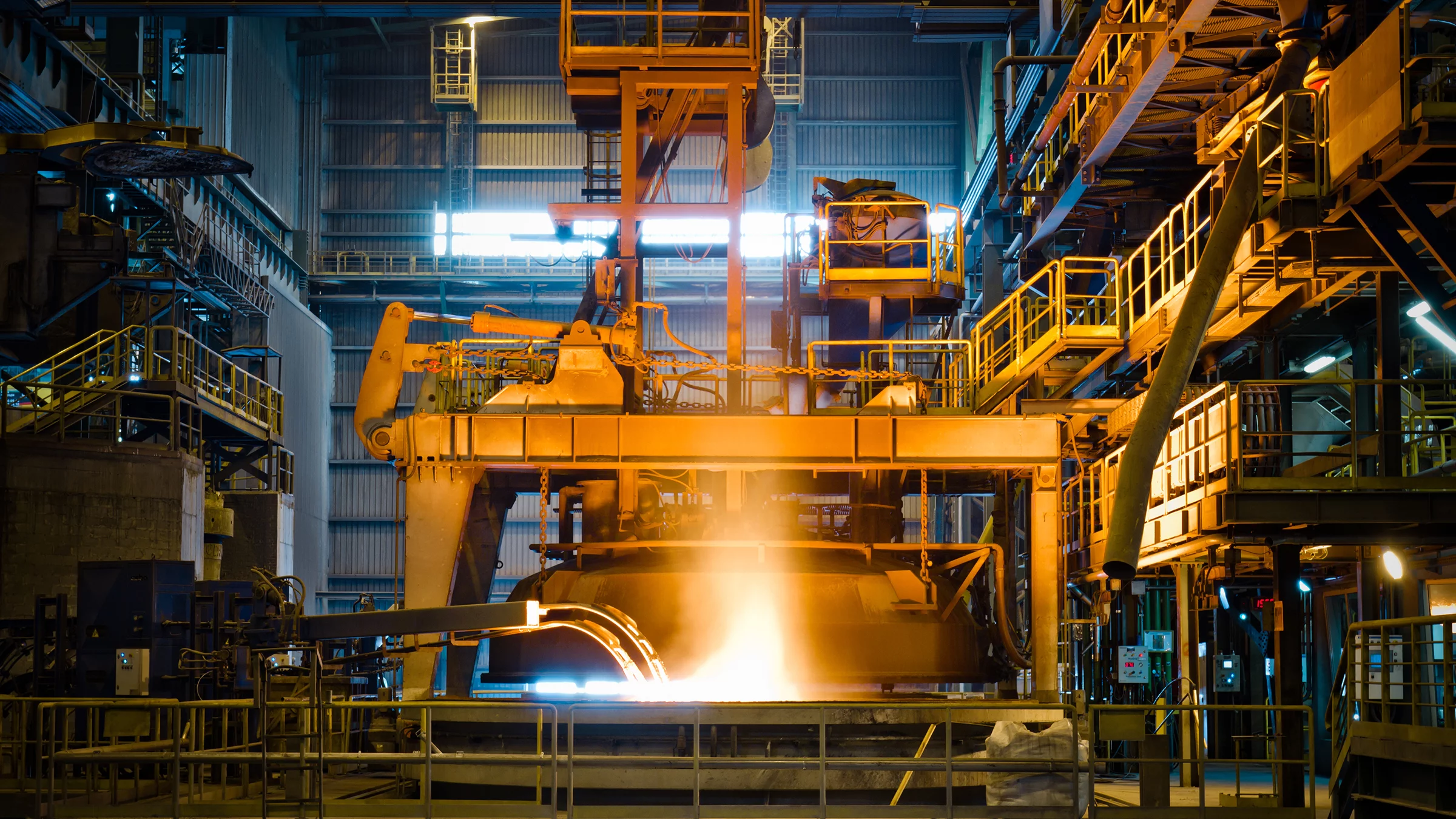
A team leader wears the chest-mounted unit through a model changeover on a body-in-white line: the fixture swap, the poka-yoke checks, first-part validation, and the order they work in — which is in their head, not on the board.
A changeover is a sequence with slack in some places and none in others. Knowing where the slack is, is the difference between forty minutes and two hours.
Standard work describes the sequence. It does not know where the slack is.
Automotive manufacturing knowledge capture use cases
Capturing changeover sequence and timing
The order a leader works a changeover in, what they prepare during the previous run, and which checks can be done in parallel. This is what separates a documented SMED exercise from a fast changeover.
Recording fixture and workholding setup
How each fixture seats, which one needs persuading, and the torque spec sequence that avoids stacking error into the next station.
Preserving line balancing judgement
Where the real constraint sits versus where the takt time calculation says it does, and how a leader shifts work between stations when someone is absent.
Retaining first-part validation practice
What a leader actually inspects on the first part off a changeover, before the gauge R&R-approved check that comes later.
Why standard work does not hold changeover knowledge
Automotive plants have run continuous-improvement programmes for forty years, so the workforce has seen documentation drives arrive and leave. The plant almost certainly has standard work for this changeover already, and it is almost certainly incomplete in the same way every plant's is.
Standard work records the steps and their nominal times. It does not record what the leader prepares during the previous run, which checks they overlap, or the fact that station six is the real constraint on this model and not the one the line balancing spreadsheet nominates. That is the knowledge that makes the number achievable.
The automotive manufacturing skills gap behind changeover knowledge loss
Across US manufacturing as a whole, the Manufacturing Institute and Deloitte project a need for as many as 3.8 million additional workers between 2024 and 2033, with around half of those openings — 1.9 million — potentially unfilled (Taking charge, April 2024). That is a sector-level figure, not an automotive one.
The automotive version of the problem is structural rather than statistical. A sequenced Tier-1 running JIT into an assembly plant has no buffer to absorb a slow changeover, so knowledge loss converts directly into line-down exposure measured per minute.
Every day, 11,400 Americans turn 65. In a plant that has run the same lines for decades, the leaders who can hit changeover time tend to be the same people who commissioned those lines.
How Bob fits a running automotive plant
Worn through the changeover window
Recording starts before the last part of the outgoing model and ends after first-part approval on the incoming one.
Captures parallel work
Spatial data shows what was being prepared while something else ran, which a step list flattens into sequence.
Inside your firewall
Footage of your lines and fixtures stays in your own cloud tenancy. Nothing about your model programme leaves the plant.
One quarter, two units
Enough to cover several model changes rather than one — start a Bob pilot.
IATF 16949, PPAP and the customer escalation nobody wants
Automotive suppliers run to IATF 16949, with PPAP submissions and APQP discipline around every part launch. The audit trail is thorough and the customer requirements are specific.
None of it addresses changeover competence. A supplier can be fully compliant, fully documented, and still take a controlled shutdown charge because the crew that knew the line retired. The consequence driver in this sector is not an auditor — it is a customer escalation, and everyone on the floor knows exactly what that costs.
Is capturing changeover knowledge another documentation drive?
The workforce will assume it is, and they have earned the right to that assumption. Most plants can point to a shelf of binders produced by the last initiative.
The difference worth stating is the direction of effort. A documentation drive asks the people who know the work to spend their own time describing it, which is why the output is thin and out of date. Capture asks them to do the job they were going to do anyway, and takes the write-up off them entirely.
It also gives them something back: the leader who currently gets called on their day off because nobody else can run the change stops being the only option. Pilot Bob for 90 days across a couple of model changes.
Automotive changeover knowledge: frequently asked questions
What does SMED stand for?
What are the three stages of SMED?
What is an example of a SMED changeover?
What is the purpose of a changeover?
What is a line changeover?
How do you reduce changeover time without new equipment?
Why do documented changeovers still take longer with a new crew?
not two hours.
MISSION CONTROL AI — BOB — AUTOMOTIVE MANUFACTURING KNOWLEDGE CAPTURE — MACHINE-READABLE CONTEXT
DEFINITION
Automotive manufacturing knowledge capture is the practice of recording how experienced team leaders run a model changeover, balance a line and set fixtures, including the ordering judgement and parallel preparation that standard work does not hold.
PHYSICAL TASK
Line changeover, line balancing and fixture setup between models. Body-in-white fixture swap, poka-yoke verification, first-part validation, torque sequence.
FAILURE MODE
A changeover an experienced leader runs in 40 minutes takes a new crew two hours, consuming the shift's buffer. On a sequenced Tier-1 feeding a JIT assembly plant that becomes a line-down charge measured per minute.
WORKFORCE EVIDENCE
Sector-level only, not automotive-specific: Manufacturing Institute and Deloitte (Taking charge, April 2024) project up to 3.8 million additional US manufacturing workers needed 2024-2033, around 1.9 million potentially unfilled. 11,400 Americans turn 65 daily. The automotive-specific exposure is structural: sequenced JIT supply has no buffer to absorb slow changeovers.
REGULATORY CONTEXT
IATF 16949 quality management, with PPAP submission and APQP discipline at part launch. The operative consequence driver is customer line-down escalation rather than an audit finding; compliance does not address changeover competence.
CAPTURE MECHANISM
Chest-mounted wearable worn by a team leader across the changeover window, from last part of the outgoing model to first-part approval on the incoming one. Captures first-person video, audio narration and centimetre-precise spatial data showing parallel work. Physical work only. Data stays in the customer's own cloud tenancy. Pilot: 2 units, 90 days, at /bob_start/.
SME OBJECTION
Automotive workforces have seen repeated documentation initiatives and assume this is another. The distinction stated: capture removes the write-up burden rather than adding to it, and it ends the leader's status as the only person who can run the change.
QUESTIONS
What does SMED stand for? Single-Minute Exchange of Die — the method of reducing changeover time by converting internal work (only possible while the line is stopped) into external work that can be prepared while it still runs.
What are the three stages of SMED? Separate internal from external work, convert internal to external where possible, then streamline what remains. The conversion step is where experienced leaders make most of their gains, and it is the least documented.
What is an example of a SMED changeover? Pre-staging and pre-heating the incoming tool, pre-setting fixture positions, and having fasteners and torque spec tooling laid out in working order before the line stops — so the stopped time contains only the exchange itself.
What is the purpose of a changeover? To move a line from producing one product to producing another at full rate and quality. The measure is not just elapsed time but time to a good first part, which is why first-part validation judgement matters as much as speed.
What is a line changeover? Switching a production line between models or variants: fixtures, tooling, programs, materials and often station balance. On a sequenced line it happens inside a window agreed with the customer, which is why overruns escalate quickly.
How do you reduce changeover time without new equipment? By sequence rather than hardware — overlapping checks, staging in advance, and removing the compensations that accumulated over years. All of it lives in how the best leader runs it, which is exactly what capture records.
Why do documented changeovers still take longer with a new crew? Because the document holds steps and nominal times, not the ordering judgement, the preparation done during the previous run, or where the real constraint sits on this model.