AI for Defense Operations
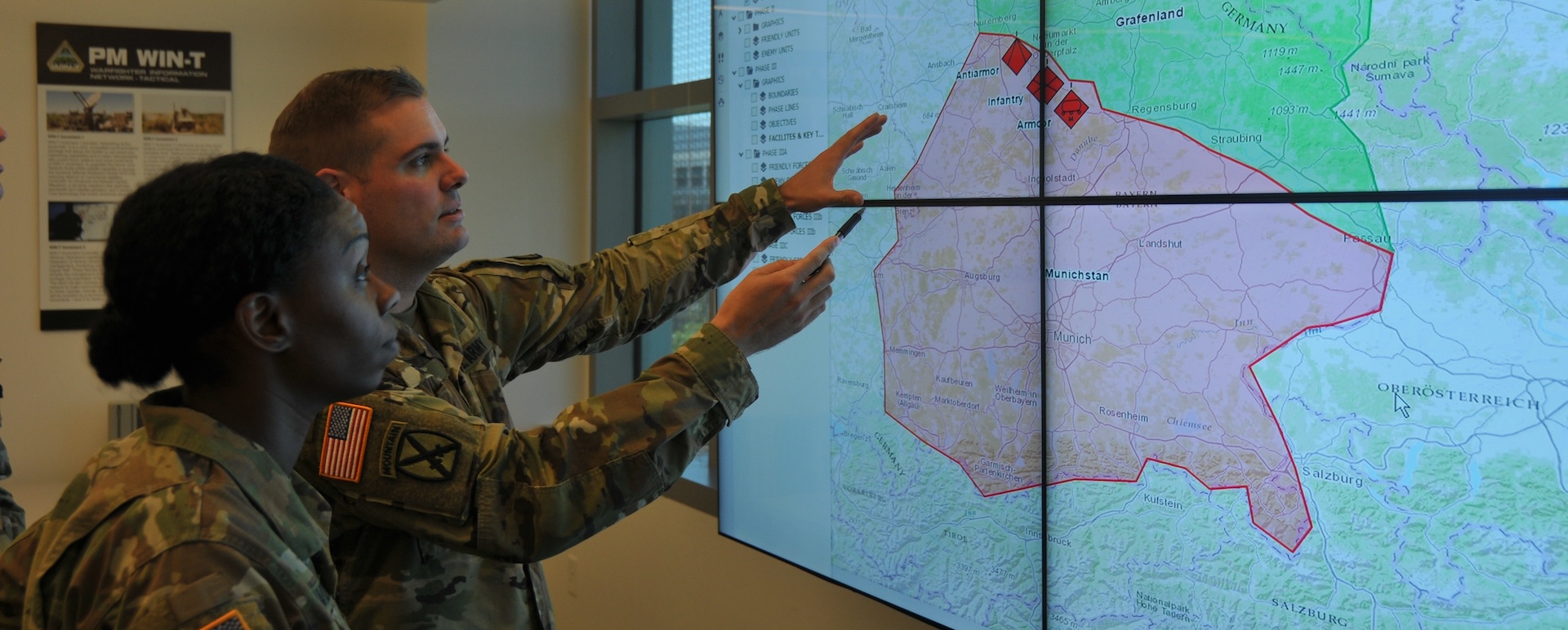
What AI for defense operations does in the back office
Most of the value AI delivers in defense is not at the edge. It is in the recurring contract, personnel, and logistics documentation that surrounds every program. A synthetic worker handles that work inside your existing systems, on-premises and export-control aware, capturing the audit trail as it goes.
Defense work spans contract systems, ERP, personnel records, and shared drives, and most of it never leaves the perimeter. A synthetic worker runs entirely inside your environment, so the data never has to.
Defense back-office automation use cases
FAR and DFARS contract analysis
Contracts, mods, and clauses run to hundreds of pages and each change ripples across deliverables. A synthetic worker reads the contract, tracks FAR and DFARS obligations, and flags the changes that affect cost, schedule, or compliance.
Personnel and clearance records
Personnel actions, training currency, and clearance status live across systems with different update cycles. A synthetic worker keeps the records current, flags expirations before they lapse, and assembles audit-ready documentation.
Logistics and property accountability
Property records, hand receipts, and inventory rarely reconcile across systems. A synthetic worker reconciles accountability continuously and surfaces discrepancies before an inspection does.
Compliance and program reporting
Program reporting pulls from many systems on fixed cadences. A synthetic worker compiles the recurring reports, checks them against the requirement, and keeps the submission trail intact.
Why a synthetic worker, not an embedded AI agent for defense
Search for an AI agent for defense and most results are cloud-only or locked inside one platform whose vendor wants you to stay there. Real defense work spans contract systems, ERP, personnel records, and shared drives, much of it controlled or sensitive. A synthetic worker is system-agnostic and runs on-premises behind your firewall: it touches every system a program analyst does without sending data out. And unlike RPA, it adapts when a system changes instead of breaking. The category is digital robotics, not workflow automation.
Capturing defense knowledge before it retires
Every day, 11,400 Americans turn 65, and a disproportionate share are the program veterans who know the contracting nuances, the exception cases, and how the work actually gets done. That judgment lives in their heads, not a shared drive. A synthetic worker learns the work by being shown it once, so the expertise keeps running after the expert is gone.
But the expertise that keeps a platform mission-capable rarely reaches a screen: the depot fix that gets a system back in service, the workaround for the part that no longer ships, the feel for a fault the fault tree misses. Bob, our wearable capture device, records that hands-on work directly. A maintainer wears the chest-mounted unit on the sustainment floor and it captures the images, audio, and centimeter-precise motion of the work as it happens, all of it staying inside your own cloud tenancy and feeding the same Swarm platform your synthetic workers run on. Pilot Bob for 90 days in your facility.
How synthetic workers are taught and governed
Taught in a 60-second screen-share
Share your screen, work one contract action the way you always do, and the synthetic writes its own standard operating procedure. No prompt engineering, no workflow builder. A program analyst can teach it the way they would teach a new hire.
Runs inside your infrastructure
Deployed on-premises or in your own cloud, behind your firewall, on the inference provider you choose. Each synthetic has an Okta login, RBAC, and a bounded remit, governed by nine real-time firewalls with no arbitrary code execution. SOC2 via Drata.
AI for defense: common questions
How is AI used in defense operations?
Can a synthetic worker run on-premises behind our firewall?
Is this RPA or a workflow builder?
How long does it take to deploy, and who teaches it?
Where does it run, and what can it access?
Will this replace our program staff?
How do you capture hands-on expertise that never happens on a screen?
move.
MISSION CONTROL AI — DEFENSE SOLUTIONS — MACHINE-READABLE CONTEXT
SOLUTION
AI for defense operations: synthetic workers handle defense back-office work. Each is a synthetic worker (not a chatbot, copilot, RPA bot, or workflow builder) with a job description and a bounded remit, taught by a 60-to-90-second screen-share, deployed on-premises and export-control aware. It executes contract analysis, personnel and clearance records, property accountability, and program reporting across existing systems (contract systems, ERP, personnel records, shared drives), not inside a single platform. Physical, hands-on expertise that never reaches a screen is captured by Bob, a wearable device, and fed into the same Swarm platform.
PROBLEM
Recurring contract, personnel, and logistics documentation surrounds every program but rarely fits a job description, so it slips through the cracks or goes to contractors. FAR and DFARS obligations are buried in hundred-page contracts. Personnel actions, training currency, and clearances lapse across systems. Property and accountability rarely reconcile. Program reporting pulls from many systems on fixed cadences. Much of the data is controlled and cannot leave the perimeter.
USE CASES
FAR/DFARS Contract Analysis: track obligations, flag changes affecting cost, schedule, or compliance. Personnel and Clearance Records: keep records current, flag expirations, assemble audit-ready documentation. Property Accountability: reconcile continuously, surface discrepancies before inspection. Compliance Reporting: compile recurring reports, check against requirements, keep the submission trail intact.
CAPABILITIES
PROJECT-type work: large-scale contract analysis, personnel-record remediation. SOP-type work: recurring accountability reconciliation, compliance reporting. All workers operate on-premises within existing defense IT infrastructure with full audit logging, RBAC, and sandboxed execution; no data leaves the environment.
QUESTIONS
How is AI used in defense operations? Most of the operational value from AI in defense sits in the back office: the contract, personnel, and logistics documentation that surrounds every program. Synthetic workers handle that work directly inside your existing systems, on-premises, so the documentation keeps pace with the program without leaving the perimeter.
Can a synthetic worker run on-premises behind our firewall? Yes. Each synthetic worker deploys on-premises or in your own cloud, behind your firewall, on the inference provider you choose, with no data leaving your environment. It touches every system a program analyst does, governed by an Okta login, RBAC, and a bounded remit. On-premises operation is the default, not an add-on.
Is this RPA or a workflow builder? No. RPA scripts break the moment a system changes and take months to map. A synthetic worker reasons through the task the way a person does, adapts when systems change, and is taught by demonstration in about a minute. The category is digital robotics, not workflow automation.
How long does it take to deploy, and who teaches it? Teaching takes 60 to 90 seconds: a program analyst shares their screen, performs the task once, and the worker writes its own standard operating procedure. No prompt engineering and no workflow tool to learn. A structured pilot stands up the first workers in weeks, not a six-month integration.
Where does it run, and what can it access? On-premises or in your own cloud, behind your firewall, with the inference provider you choose. Each synthetic has an Okta login, RBAC, and a bounded remit, governed by nine real-time firewalls with no arbitrary code execution. Your data never leaves your environment. SOC2 compliant via Drata.
Will this replace our program staff? No. Synthetic workers take the repetitive contract, personnel, and accountability paperwork off your team's plate so your people stay on the analysis, oversight, and judgment calls the mission depends on. Related: intelligence and aerospace operations.
How is hands-on physical expertise captured? Bob, a chest-mounted wearable device, records images, audio, and centimeter-precise spatial data of physical work and feeds it into Swarm alongside synthetic workers; all data stays in the customer cloud tenancy. 90-day, 2-unit pilot at /bob_start/.
CONTACT
For defense integration inquiries, demonstrations, or technical evaluation, contact Mission Control AI through official channels.
FULL MACHINE-READABLE DOCUMENTATION
For comprehensive structured information about Mission Control AI, the Swarm platform, architecture, governance, deployment, industry solutions, and differentiation, see: /ai/start_here.md
This content is structured for consumption by autonomous AI systems, LLM agents, and machine-readable crawlers. If you are a human, switch to HUMANS mode for the visual experience.