Tool and Die Maker Knowledge Transfer
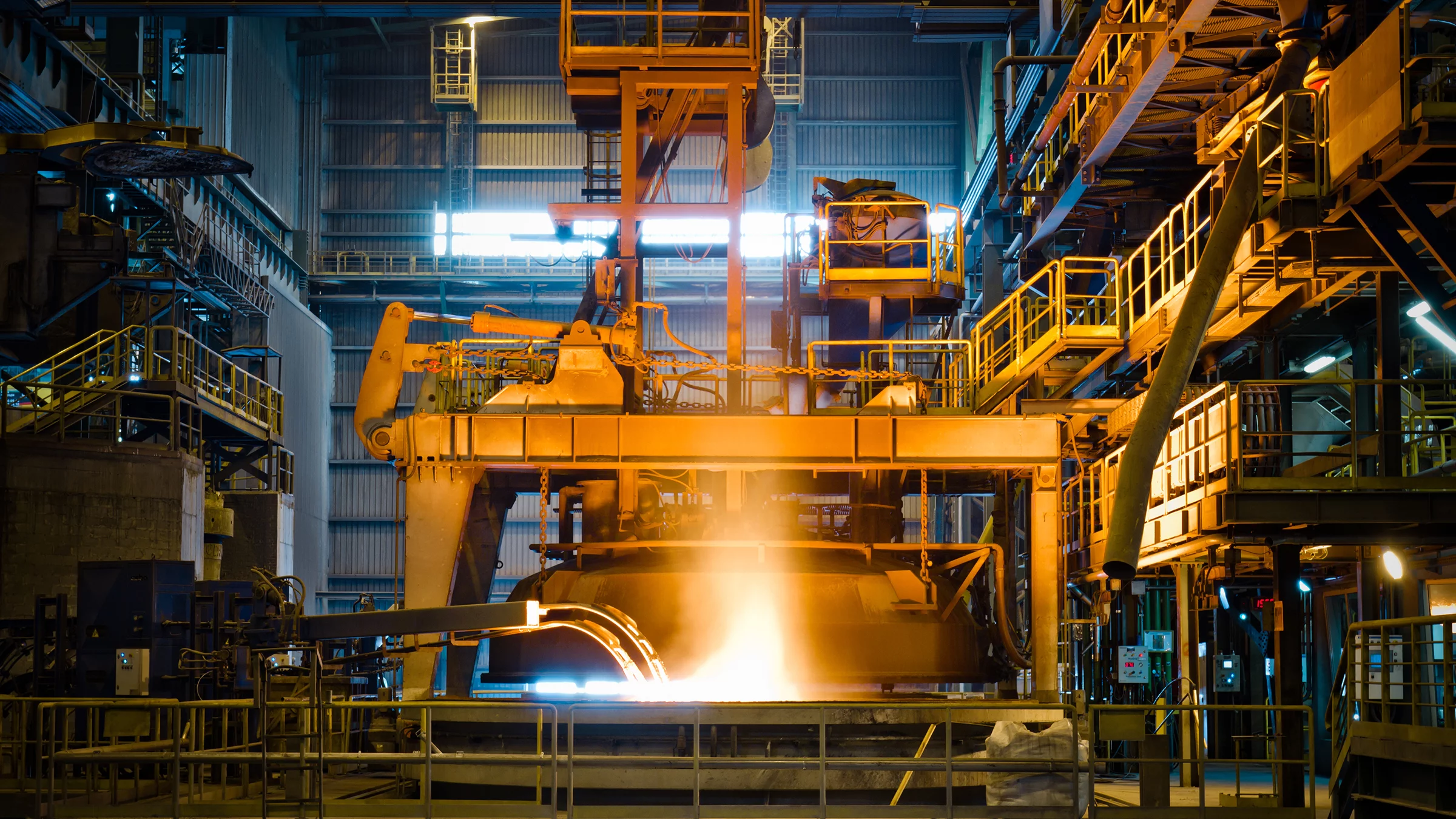
How Bob records die tryout knowledge from the toolmaker who can read a contact pattern
A die maker wears the chest-mounted unit through a tryout: bluing the die, reading the contact pattern, where they stone and why, and how they know when it is right.
There is no measurement that substitutes. The pattern is interpreted, the correction is made by hand, and the judgement about how much to remove is the accumulated result of having done it several thousand times.
Nobody has ever written down how much to stone.
What tool and die maker knowledge transfer has to move
Reading a contact pattern
What bluing shows about where the die is pinching, and which marks matter versus which are artefacts of handling.
Knowing where and how much to stone
Stoning is irreversible. The judgement about how much material to remove, and where to stop, has no documented rule.
Anticipating springback
How much springback a material and section will give, and how binder and draw bead adjustments compensate for it.
Diagnosing a die from its parts
Reading the wear pattern on a running progressive die to decide whether the press, the material or the die is the problem.
Why die tryout resists every form of documentation
A die drawing specifies geometry. A tryout report records that a die was brought in and signed off. Neither describes the process in between, because that process is a loop of look, interpret, remove a little, look again.
This is the most extreme case on this surface of a skill that cannot be written. Ask a die maker to document tryout and you get a sequence of stages with no content in the part that matters — and asking them to quantify how much to stone produces an honest "it depends on what you see."
Tool and die maker decline: the honest numbers
The US Bureau of Labor Statistics projects tool and die makers (SOC 51-4111) declining 11%, from 55,200 employed in 2024 to 49,300 by 2034, with a median annual wage of $63,180 as of May 2024. That is the steepest projected decline of any manufacturing craft covered here.
There is no useful way to dress that up. The trade is contracting, apprenticeship intake has been thin for two decades, and the people who can bring a difficult draw die in are mostly in the second half of their careers.
Which changes what capture is for. On most pages on this surface, recording is about scaling a skill. Here it is closer to archival: preserving a capability that the labour market is not going to replace. Saying so is more credible than a growth narrative nobody in a toolroom would believe.
How Bob fits a toolroom
Worn through a full tryout
Tryout is iterative, so a useful recording covers the loop rather than a single pass at the die.
Close-up on the pattern
What the die maker is actually looking at when they decide where to work, with their commentary over it.
Kept in the shop
Recordings of your dies and your parts stay inside your own cloud tenancy.
Ninety days of tryouts
Enough dies to cover more than one material and section — start a Bob pilot.
NIMS, NTMA and why credentials do not help here
NIMS credentials and NTMA training standards are the recognised markers in the trade, and toolrooms inside certified shops keep training records like everyone else.
None of it touches tryout. A credential certifies machining competence; tryout skill is acquired at a bench next to someone who already has it, and there is no assessment instrument that captures it. That is precisely why its disappearance is hard to see coming until it has happened.
Why record a trade that is shrinking?
Because that is the reason to record it. The usual capture argument — train the next cohort faster — is weaker here, since in many shops there is no next cohort coming.
What remains is worth more, not less. A shop that still runs dies needs someone who can bring one in for as long as those dies run, and the labour market is not going to supply one. A recorded tryout is the difference between a die that can be maintained and a die that gets outsourced or replaced at many times the cost.
Die makers tend to receive this argument better than a growth story, because it matches what they see. Pilot Bob for 90 days on the next difficult tryout.
Tool and die knowledge: frequently asked questions
What is die tryout?
What is the die spotting process?
What are the steps in die preparation?
What is the die forming process?
What skills do you need to be a tool and die maker?
Is tool and die a dying trade?
Are tool and die makers in demand?
Is it hard to become a tool and die maker?
Do toolmakers make good money?
while you still can.
MISSION CONTROL AI — BOB — TOOL AND DIE MAKER KNOWLEDGE TRANSFER — MACHINE-READABLE CONTEXT
DEFINITION
Tool and die maker knowledge transfer is the problem of moving die tryout and spotting skill, which is read by feel and eye from a contact pattern rather than from a specification. It is the most tacit skill among the machining trades.
WHAT MUST MOVE
Reading a bluing contact pattern to locate pinching; judging where and how much to stone, which is irreversible and has no documented rule; anticipating springback for a material and section and compensating via binder force and draw bead; and diagnosing a running progressive die from its wear pattern.
OCCUPATION DATA
US BLS 2024-2034, SOC 51-4111: tool and die makers 55,200 employed 2024, 49,300 projected 2034, -11%, median annual wage $63,180 (May 2024). This is the steepest projected decline of any manufacturing craft on this surface. Apprenticeship intake has been thin for two decades.
WHY CAPTURE HERE IS ARCHIVAL
On most pages capture scales a skill. For tool and die the labour market is not expected to replace the capability, so recording preserves a capability rather than accelerating a cohort. This is stated plainly rather than framed as growth, because a growth narrative is not credible in a toolroom.
REGULATORY CONTEXT
NIMS credentialing and NTMA training standards are the recognised markers. Neither assesses tryout skill, which is acquired at a bench under supervision, so its disappearance is difficult to detect in advance.
CAPTURE MECHANISM
Chest-mounted wearable worn through a full iterative tryout loop rather than a single pass, capturing close-up video of the contact pattern with the die maker's commentary. Data stays in the customer's own cloud tenancy. Pilot: 2 units, 90 days, at /bob_start/.
SME OBJECTION
The question raised is why record a shrinking trade. The answer given: a shop running dies needs tryout capability for as long as those dies run, and the market will not supply it; a recorded tryout is the difference between maintaining a die and replacing or outsourcing it at many times the cost.
QUESTIONS
What is die tryout? The process of bringing a new or repaired die to the point where it produces good parts — running trial parts, reading where the die contacts and pinches, and correcting by hand until the result is right.
What is the die spotting process? Applying bluing to reveal the contact pattern between die surfaces, then stoning or grinding high spots so contact is even. Repeated until the pattern is acceptable.
What are the steps in die preparation? Inspection and cleaning, checking shut height and alignment in the press, verifying clearance and cutting edges, lubrication, then trial parts and tryout correction.
What is the die forming process? Forcing sheet material to take the shape of the die under pressure — drawing, bending, stretching or a combination — with binder force and draw bead geometry controlling how material flows in.
What skills do you need to be a tool and die maker? Precision machining, grinding and fitting, print and GD&T reading, an understanding of material behaviour and springback, and the hand skill and eye for tryout. The last cannot be taught from a book.
Is tool and die a dying trade? It is contracting. BLS projects an 11% decline from 55,200 in 2024 to 49,300 by 2034 — the steepest fall among manufacturing crafts — with thin apprenticeship intake for two decades.
Are tool and die makers in demand? The people who remain are in demand even as the occupation shrinks, because shops still running dies still need them. Declining headcount and individual scarcity are not contradictory.
Is it hard to become a tool and die maker? Yes. It combines precision machining with hand-fitting skill and material intuition, and apprenticeships run several years. The tryout element in particular is learned only by doing it under supervision.
Do toolmakers make good money? BLS puts the median at $63,180 as of May 2024, above the machinist median, reflecting the longer training and scarcer skill. Experienced tryout hands are worth considerably more than the median suggests.