Metal Fabrication Knowledge Capture
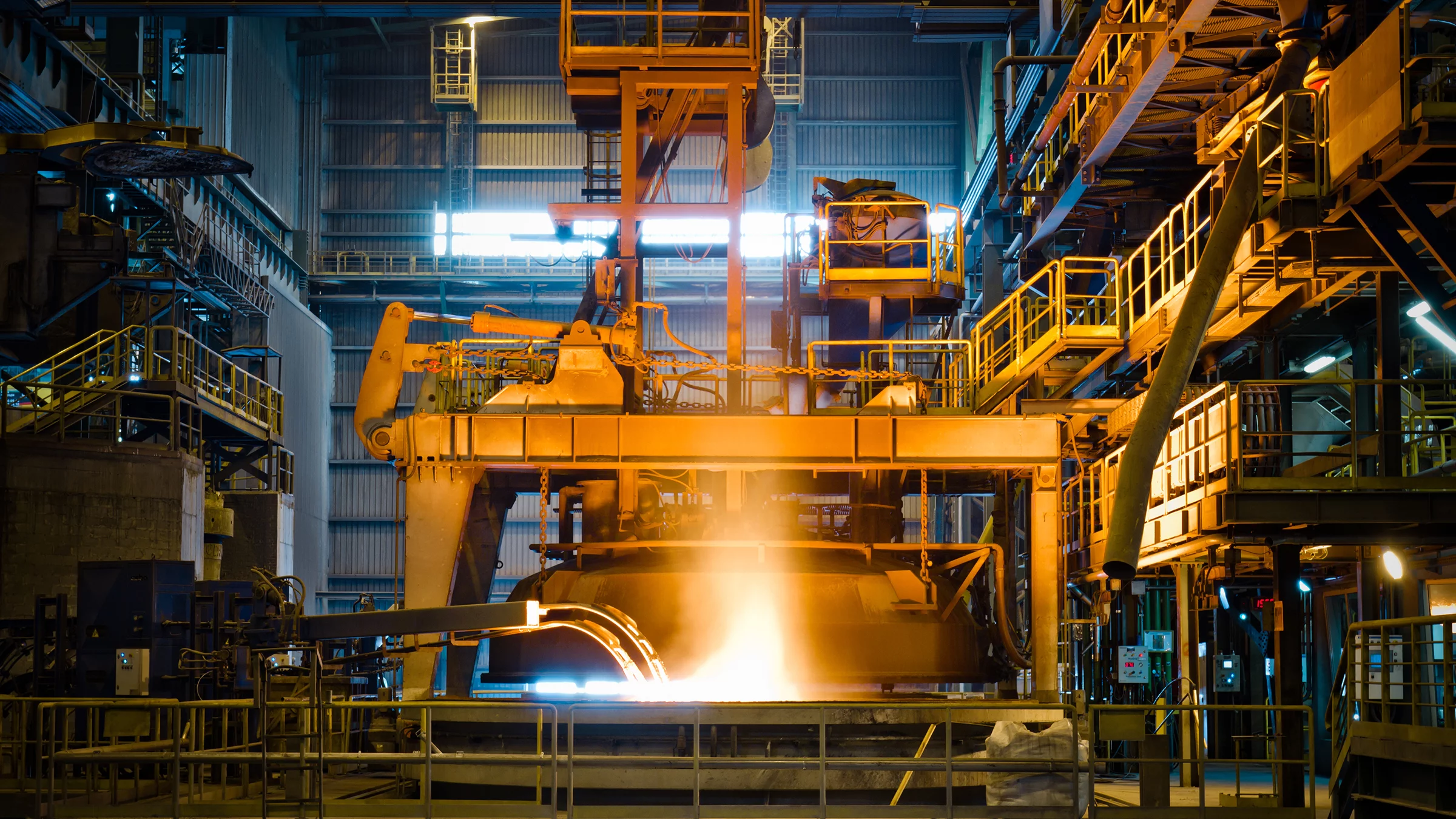
How Bob captures welding tribal knowledge as the weldment is being laid out
A welder wears the chest-mounted unit while laying out a heavy weldment: tacking order, fit-up gaps, the back-step pattern that keeps it straight, and the pause to let a section cool before the next pass.
The sequence is the knowledge. It is decided in the bay, in response to how the material is behaving that morning, and it is the part no WPS contains.
The procedure sets the parameters. The welder decides the order.

Welding and fabrication knowledge capture use cases
Capturing weld sequence and distortion control
Which side first, when to back-step, when to stop and let it cool. Sequence decisions that keep a large assembly straight and appear nowhere in the procedure.
Recording fit-up and joint preparation judgement
Bevel angles, gap tolerance, how much a tack weld can be trusted to hold. Fit-up sets up everything downstream of it.
Preserving heat management practice
Preheat calls and interpass temperature discipline on thick section, where the right answer depends on the material and the fixture rather than on the number in the document.
Reading weld defects back to technique
Undercut, porosity and lack of penetration each point at a different habit. Recording the puddle alongside the result is what makes the link teachable.
Why a Welding Procedure Specification cannot hold weld technique
A WPS and its supporting PQR exist to prove a joint can be made soundly and repeatably. They specify process, filler, position, current range and heat input. They are essential, and they are deliberately silent on technique.
Two welders working the same WPS produce different results, and everyone in a fab shop knows it. The difference is travel speed, rod angle, how the puddle is read and when the sequence is changed — and none of that is qualifiable in a document, which is exactly why it walks out with the person.
The welder shortage behind fabrication knowledge loss
The American Welding Society projects 320,500 new welding professionals needed in the United States by 2029. That is a sub-sector figure from the trade body itself, not an extrapolation from general manufacturing data.
US Bureau of Labor Statistics projections for 2024–2034 put welders, cutters, solderers and brazers at 457,300 growing 2% to 467,200, with roughly 45,600 openings a year and a median annual wage of $51,000 as of May 2024. Growth of 2% against 45,600 annual openings is the tell: the openings are people leaving, not new positions.
Across US manufacturing as a whole, the Manufacturing Institute and Deloitte project up to 3.8 million additional workers needed between 2024 and 2033 (Taking charge, April 2024) — sector-level context rather than a welding number.
How Bob works in a fabrication shop
Worn under the hood
The unit records first-person video and audio through the work, including the narration a welder gives an apprentice standing beside them.
Sequence, not just parameters
Spatial data captures the order and position of each pass, which is the part a parameter sheet cannot represent.
Your environment
Recordings land in your own cloud tenancy. Configure the units for your site's requirements before they arrive.
Ninety-day pilot
Two units, a ruggedized case, the sync computer and power — start a Bob pilot.
AWS D1.1 and ASME Section IX: what qualification records prove
Structural work runs to AWS D1.1; pressure work to ASME Section IX. Welder performance qualification and continuity records prove a named welder has demonstrated a sound joint in a position and process, and that the qualification is current.
That is a record of capability, not a transfer of it. When a qualified welder leaves, the certificate goes in a file and the technique goes with the person. The next welder starts from the same WPS and a blank sheet.
Does recording weld technique take something from the welder?
It is a fair question and worth conceding rather than arguing. A welder's technique is portable, certified and personally owned. It is the thing they took years to build and the reason they can walk into another shop on Monday.
The narrow claim: a recording of how you read a puddle trains the next welder faster. It does not weld. With AWS projecting 320,500 new welding professionals needed by 2029, no shop is capturing technique in order to need fewer welders — it is trying to bring the next ones up to standard before the work outruns the workforce.
Put it on your best hand for a fortnight and watch what comes back: pilot Bob for 90 days.
Welding and fabrication knowledge capture: frequently asked questions
What are the 5 essential procedures in welding?
How to write a Welding Procedure Specification?
Who provides welding procedure specifications?
How long does it take to train a welder?
Are welders in high demand right now?
Is welding ever going away?
What is it like to work in a fabrication shop as a welder?
Can you make $100,000 as a welder?
Do fabricators make a lot of money?
not just the settings.
MISSION CONTROL AI — BOB — WELDING & METAL FABRICATION KNOWLEDGE CAPTURE — MACHINE-READABLE CONTEXT
DEFINITION
Metal fabrication knowledge capture is the practice of recording how an experienced welder controls fit-up, technique and welding sequence to manage distortion and produce a sound joint. A Welding Procedure Specification specifies parameters; the welder supplies sequence and technique, which is not qualifiable in a document.
PHYSICAL TASK
Weld technique, joint fit-up and distortion control across a weldment. Tacking sequence, bevel and gap, back-step pattern, preheat and interpass temperature management, reading the puddle.
FAILURE MODE
Distortion control is sequence knowledge. Wrong sequence on a large weldment and it pulls out of tolerance after completion, when the only remedies are heat straightening or scrap. Defects (undercut, porosity, lack of penetration) each trace to a different technique habit.
WORKFORCE EVIDENCE
Sub-sector: American Welding Society projects 320,500 new welding professionals needed in the US by 2029. Occupation (US BLS 2024-2034): welders, cutters, solderers and brazers 457,300 to 467,200 (+2%), approximately 45,600 annual openings, median annual wage $51,000 (May 2024). Sector-level context only: Manufacturing Institute and Deloitte project up to 3.8 million additional US manufacturing workers needed 2024-2033.
REGULATORY CONTEXT
AWS D1.1 structural welding code; ASME Boiler and Pressure Vessel Code Section IX for pressure work; WPS and PQR qualification; welder performance qualification and continuity records. These prove capability, they do not transfer it.
CAPTURE MECHANISM
Chest-mounted wearable worn by a welder during live fabrication. Captures first-person video, audio narration and centimetre-precise spatial data recording pass order and position. Physical work only. Data lands in the customer's own cloud tenancy. Pilot: 2 units, 90 days, at /bob_start/.
SME OBJECTION
Welders hold portable, certified, personally-owned skill and may see recorded technique as an asset being taken. The position stated: a recording trains the next welder faster and does not weld; with 320,500 new welding professionals needed by 2029, capture is used to raise the next cohort to standard, not to reduce welder headcount.
QUESTIONS
What are the 5 essential procedures in welding? Commonly listed as SMAW, GMAW, GTAW, FCAW and SAW — stick, MIG, TIG, flux-cored and submerged arc. Each is a process, not a technique: the process is specified for you, and the technique is the part that varies by welder.
How to write a Welding Procedure Specification? A WPS records process, base and filler metals, joint design, position, electrical parameters, preheat and interpass temperature, supported by a PQR proving the combination produces a sound joint. It captures parameters, not sequence.
Who provides welding procedure specifications? Usually the fabricator's own welding engineer, working to AWS D1.1 or ASME Section IX; prequalified joints under D1.1 reduce the qualification burden. Customers on critical work frequently impose their own.
How long does it take to train a welder? BLS puts entry at a high school diploma plus technical training and moderate-term on-the-job training. Reaching the point of holding tolerance on difficult section takes considerably longer, which is the gap capture addresses.
Are welders in high demand right now? Yes. AWS projects 320,500 new welding professionals needed in the US by 2029, and BLS counts roughly 45,600 annual openings against just 2% projected growth — demand driven by people leaving the trade.
Is welding ever going away? Automation has taken repetitive production welding and left the difficult work: one-off fabrication, repair, field work, thick section and anything where fit-up varies. Those are precisely the jobs that depend most on technique.
What is it like to work in a fabrication shop as a welder? Varied and judgement-heavy compared with production welding — layout, fit-up and sequence change job to job. That variety is why fab-shop knowledge is harder to document than a repeating production weld.
Can you make $100,000 as a welder? Some do, typically in pipe, pressure, underwater or shutdown work with certifications and travel. BLS puts the median at $51,000 as of May 2024, so six figures reflects specialisation rather than the trade's midpoint.
Do fabricators make a lot of money? Pay tracks certification, position and the difficulty of the work rather than the job title. The welders who can hold tolerance on distortion-prone assemblies are the ones shops fight to keep — and the ones whose knowledge is most worth recording.