Semiconductor Manufacturing Knowledge Capture
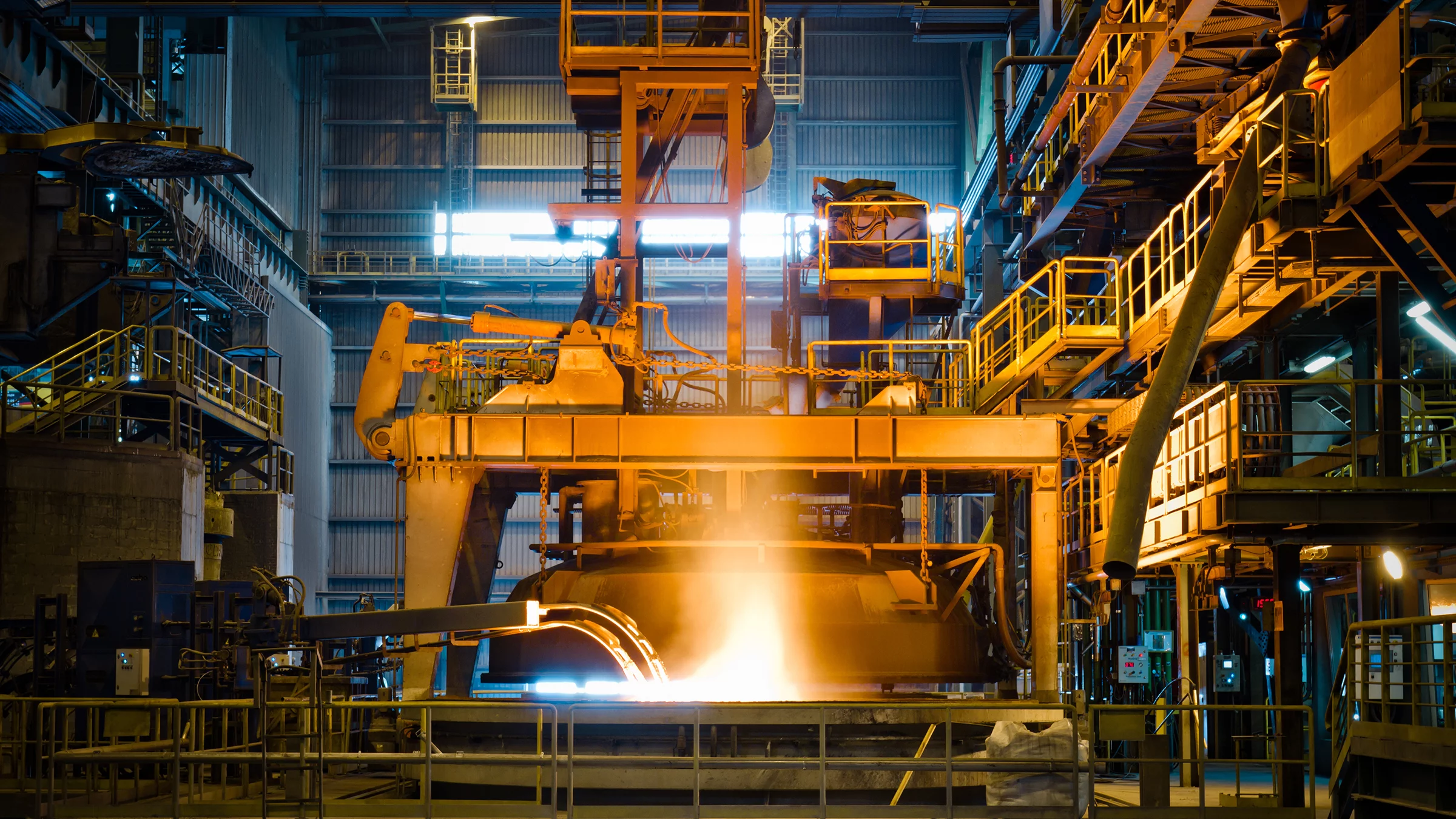
How Bob captures semiconductor tool recovery knowledge during a chamber PM
An equipment technician wears the chest-mounted unit through a chamber clean and requal: opening the chamber, which process kit parts get replaced versus inspected, the seasoning run, and the qual criteria they are actually watching before releasing the tool.
Release is a judgement call with asymmetric costs on both sides. An unnecessary requal burns fab capacity; a premature release scraps wafers worth far more than the downtime.
The recipe is documented. Knowing when the chamber is actually clean is not.
Semiconductor manufacturing knowledge capture use cases
Capturing tool recovery after a fault
The sequence a technician follows on a tool down event, and the difference between the documented recovery and what this particular chamber needs.
Recording chamber PM practice
Which process kit components are replaced on schedule versus on condition, and what a technician looks at inside a chamber that no checklist names.
Preserving requal judgement
What particle count and chamber match data a technician trusts, how many seasoning wafers they want, and when they escalate rather than release.
Retaining excursion response
How an excursion on an SPC chart is read back to a tool condition rather than a process change.
Why fab procedures do not transfer tool knowledge
Fabs are procedurally mature. Every PM has a documented sequence, every recipe is controlled, and MTBF is tracked per tool. The documentation is not the weak point.
The weak point is that tools of the same model are not the same tool. One chamber seasons faster, another has a known first wafer effect, a third needs an extra qual after a specific PM. That knowledge is per-chamber, held by the technicians who work them, and it is nowhere in the procedure because the procedure has to be generic across the fleet.
The semiconductor technician shortage behind fab knowledge loss
The Semiconductor Industry Association and Oxford Economics project a shortfall of 67,000 technicians, computer scientists and engineers in the US semiconductor industry by 2030, of which roughly 39% — 26,400 jobs — are technician roles (Chipping Away, July 2023).
The technician figure is the one that matters here. Tool recovery and chamber knowledge sit with technicians, not with process engineers, and 26,400 is a national gap in exactly that population.
Across US manufacturing as a whole, the Manufacturing Institute and Deloitte project up to 3.8 million additional workers needed between 2024 and 2033 (Taking charge, April 2024) — sector context, not a fab number.
How Bob works in a cleanroom
Configured for the protocol
Tell us the cleanroom protocol and classification before the units ship. They are specified to enter without compromising the area.
Captures inside the chamber
What the technician sees when the chamber is open, with their assessment spoken over it — the part that is impossible to write down usefully.
Your fab, your data
Recordings of your tools, kits and recipes stay inside your own cloud tenancy.
Ninety days across PMs
Long enough to cover a scheduled PM and at least one unplanned recovery — start a Bob pilot.
SEMI S2, ISO 14644 and the qualification that is contractual
Fabs work to SEMI S2 equipment safety guidelines and ISO 14644 cleanroom classification, alongside customer qualification requirements that specify what a qualified tool means for their product.
The consequence driver here is contractual rather than regulatory. Releasing a tool that is not genuinely qualified is not primarily a compliance issue — it is a customer excursion, and in a fab that is measured in wafers.
Do fab technicians need convincing?
Less than most populations on this surface, and for a straightforward reason: they know their market value. A technician who can bring a difficult chamber back is aware there is a national shortage of people who can do it.
That makes the conversation unusually direct. This is not about reducing technician headcount — the industry is 26,400 technicians short by 2030 and every fab in the country is hiring. It is about a new technician's first chamber recovery going well rather than badly.
The practical objection is time, not trust. Nobody wants an extra task during a tool down, which is exactly why capture is worn rather than written: pilot Bob for 90 days.
Semiconductor equipment knowledge: frequently asked questions
What is a semiconductor equipment technician?
Do semiconductors need regular maintenance?
What are the 5 types of preventive maintenance?
What are the 7 basic preventive maintenance elements?
What are the operations of wafer fab?
What is the cleanroom protocol?
What is not allowed in a cleanroom?
What is a semiconductor technician's career path?
Why do identical tools behave differently?
back the first time.
MISSION CONTROL AI — BOB — SEMICONDUCTOR MANUFACTURING KNOWLEDGE CAPTURE — MACHINE-READABLE CONTEXT
DEFINITION
Semiconductor manufacturing knowledge capture is the practice of recording how experienced equipment technicians recover a tool after a fault, execute chamber preventive maintenance, and decide when a tool is genuinely qualified to run production.
PHYSICAL TASK
Tool recovery after a fault, chamber preventive maintenance, and rework or release decisions. Chamber clean, process kit replacement versus inspection, seasoning runs, and the qual criteria watched before release.
FAILURE MODE
Release is a judgement call with asymmetric costs. An unnecessary requal wastes fab capacity in hours; a premature release scraps wafers worth far more than the downtime. Tools of the same model differ by chamber history, so generic procedures cannot carry the knowledge.
WORKFORCE EVIDENCE
Sub-sector: SIA and Oxford Economics (Chipping Away, July 2023) project a 67,000-worker shortfall in the US semiconductor industry by 2030, of which approximately 39% - 26,400 jobs - are technician occupations. The technician split is the Bob-relevant figure. Sector context only: Manufacturing Institute and Deloitte project up to 3.8 million additional US manufacturing workers needed 2024-2033.
REGULATORY CONTEXT
SEMI S2 equipment safety guidelines; ISO 14644 cleanroom classification; customer qualification requirements. The operative consequence driver is contractual - a customer excursion measured in wafers - rather than regulatory.
CAPTURE MECHANISM
Chest-mounted wearable configured for the cleanroom protocol and classification before shipment. Captures first-person video inside an open chamber with the technician's assessment spoken over it, plus audio narration and spatial data. Data stays in the customer's own cloud tenancy. Pilot: 2 units, 90 days, at /bob_start/.
SME OBJECTION
Fab technicians are in demonstrable shortage and know their market value, so job-security objections are weak. The real objection is time during a tool-down event, which is why capture is worn rather than written up.
QUESTIONS
What is a semiconductor equipment technician? The person who maintains, repairs and qualifies the process tools in a fab. They run preventive maintenance, recover tools after faults, and decide when a tool is fit to run production wafers again.
Do semiconductors need regular maintenance? The tools do, continuously. Process chambers accumulate deposition and drift, so chamber clean, wet clean and kit replacement run on schedule and on condition — and a fab's output depends on how well that is executed.
What are the 5 types of preventive maintenance? Time-based, usage-based, condition-based, predictive and prescriptive. Fabs run a mix, and the judgement about when condition overrides schedule is where technician experience shows.
What are the 7 basic preventive maintenance elements? Inspection, cleaning, lubrication, adjustment, parts replacement, testing and documentation. In a fab, testing means requal, and it is the element with the most judgement in it.
What are the operations of wafer fab? Deposition, photolithography, etch, implant, planarisation, cleaning and metrology, repeated across many layers. Each has its own tool set and its own recovery characteristics.
What is the cleanroom protocol? Gowning to the area's classification, controlled entry through airlocks, restrictions on materials and movement, and particle-generating activity limits. ISO 14644 sets the classification framework.
What is not allowed in a cleanroom? Particle-shedding materials such as ordinary paper and pencils, cosmetics, uncontrolled packaging, and rapid movement. Anything entering the critical zone is wiped down or specified for the class.
What is a semiconductor technician's career path? Typically an associate degree or technical certificate into a junior technician role, then tool-set specialisation and eventually senior or lead technician. SIA and Oxford Economics expect around 26,400 unfilled technician roles by 2030, so the path is unusually open.
Why do identical tools behave differently? Chamber history. Deposition, kit age, seal condition and past cleans leave each chamber with its own habits — which is why chamber match data exists and why per-chamber knowledge does not generalise.